




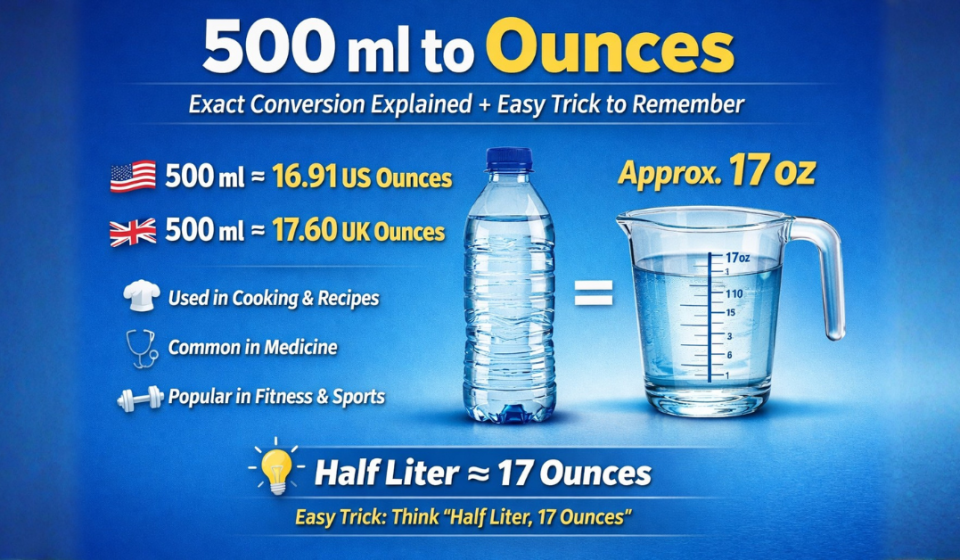

500 ml to ounces is one of the most common volume conversion people search for. If you want the quick answer:
Table Of Content
- Key Highlights
- US Measurement System
- UK Measurement System
- Formula
- Remember This
- 1. Water Bottles
- 2. Soft Drinks
- 3. Cooking Measurements
- 4. Medical and Lab Measurements
- 1. Confusing Ounces with Weight
- 2. Ignoring US vs UK Ounces
- 3. Rounding Too Early
- Is 500 ml equal to 16 oz?
- How many ounces in 500 ml water?
- Is 500 ml half a liter?
- Is 16 oz equal to 500 ml?
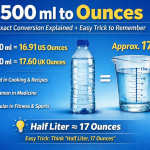
👉 500 ml = 16.91 US fluid ounces
👉 500 ml = 17.60 UK fluid ounces
Depending upon which system of measurements you use (US or UK), the conversion of 500 ml to ounces will yield slightly different numbers.
If you’re in the kitchen measuring liquids for cooking, finding how many ounces there are in 500 ml will save you time and work as well as eliminate errors.
This article will give you the easiest explanation of how to convert 500 ml to oz plus a helpful hint to remember the conversion.
Key Highlights
✔ 500 ml = 16.91 US fluid ounces
✔ 500 ml ≈ 17 oz (rounded)
✔ 500 ml = 17.60 UK fluid ounces
✔ 1 ml = 0.033814 US ounces
✔ Used in cooking, medicine, chemistry, and fitness
500 ml to Ounces — Quick Answer
Let’s get straight to the math.
US Measurement System
500 ml × 0.033814 = 16.907 oz
So,
👉 500 ml = 16.91 ounces
Most people round it to:
👉 17 ounces
UK Measurement System
The UK ounce is slightly different.
500 ml × 0.035195 = 17.60 oz
So,
👉 500 ml = 17.60 UK ounces
Why the Ounce Value Changes
Many people get confused here. You’re not alone.
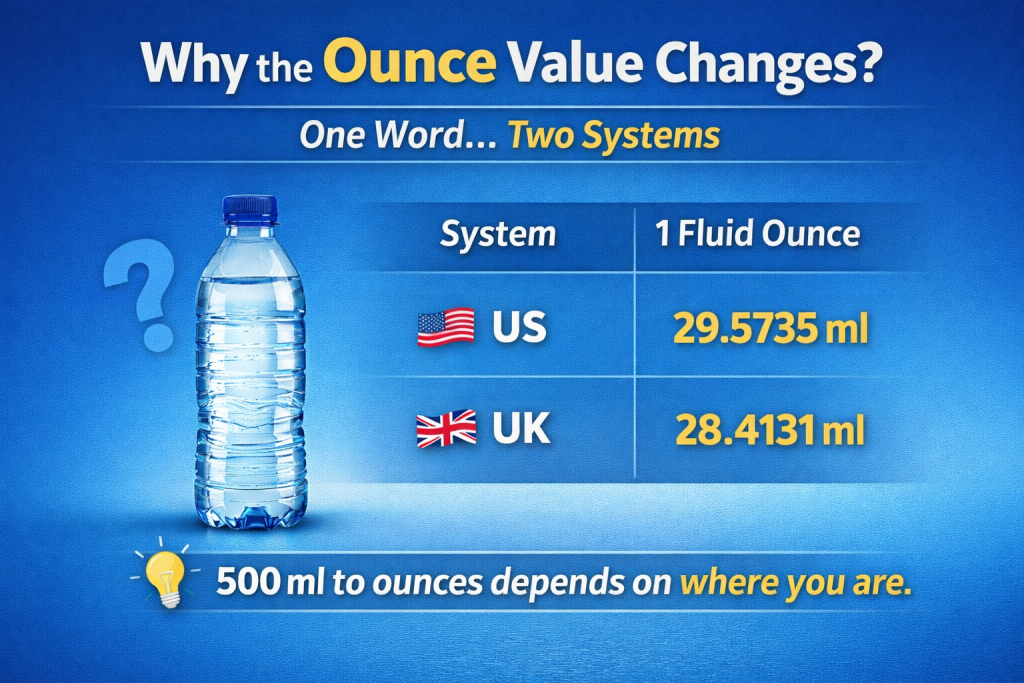
The word “ounce” actually refers to two different systems.
| System | 1 Fluid Ounce |
|---|---|
| US | 29.5735 ml |
| UK | 28.4131 ml |
Because of this difference, 500 ml to ounces changes depending on the country.
Most recipes and product labels online use the US system.
How Many Ounces in 500 ml (Easy Formula)
If you want to calculate it yourself, use this formula.
Formula
ounces = milliliters × 0.033814
Example:
500 × 0.033814 = 16.91 oz
Simple.
A Trick to Estimate 500 ml to Ounces
Here’s a quick mental trick.
You don’t always need a calculator.
Remember This
30 ml ≈ 1 ounce
Now divide:
500 ÷ 30 = 16.67
That’s very close to the real answer:
👉 16.91 ounces
This trick works surprisingly well.
Real-World Examples of 500 ml
You probably see 500 ml every day without noticing.
Here are some common items.
1. Water Bottles
Most standard water bottles contain:
👉 500 ml (≈ 17 oz)
This size is extremely common in gyms and supermarkets.
2. Soft Drinks
Many soda bottles worldwide use 500 ml packaging.
Examples include brands like:
- Coca-Cola
- Pepsi
- Sprite
3. Cooking Measurements
Recipes sometimes require 500 ml of liquid.
Examples:
- Soup broth
- Milk
- Pasta sauce
In ounces, that becomes:
👉 16.9 oz
4. Medical and Lab Measurements
Healthcare and chemistry frequently use milliliters.
Students preparing for exams often see unit conversions like:
- ml to oz
- ml to liters
- ml to grams
If you’re studying biology or chemistry topics, resources like the National Council of Educational Research and Training curriculum often explain metric conversions clearly.
For structured exam preparation material, you can also explore:
Why Metric vs Imperial Still Exists
Many people might ask why the world still has two systems.
Most of the world uses the metric system (milliliters/litres, grams), while only one country continues to use the imperial (ounces, lb., gallons) system – The United States.
Consequently, conversions (e.g., 500 mL = ounces) are searched millions of times worldwide each year as the metric system (based on powers of ten) is generally less complicated than other systems.
Conversion Chart for Common Values
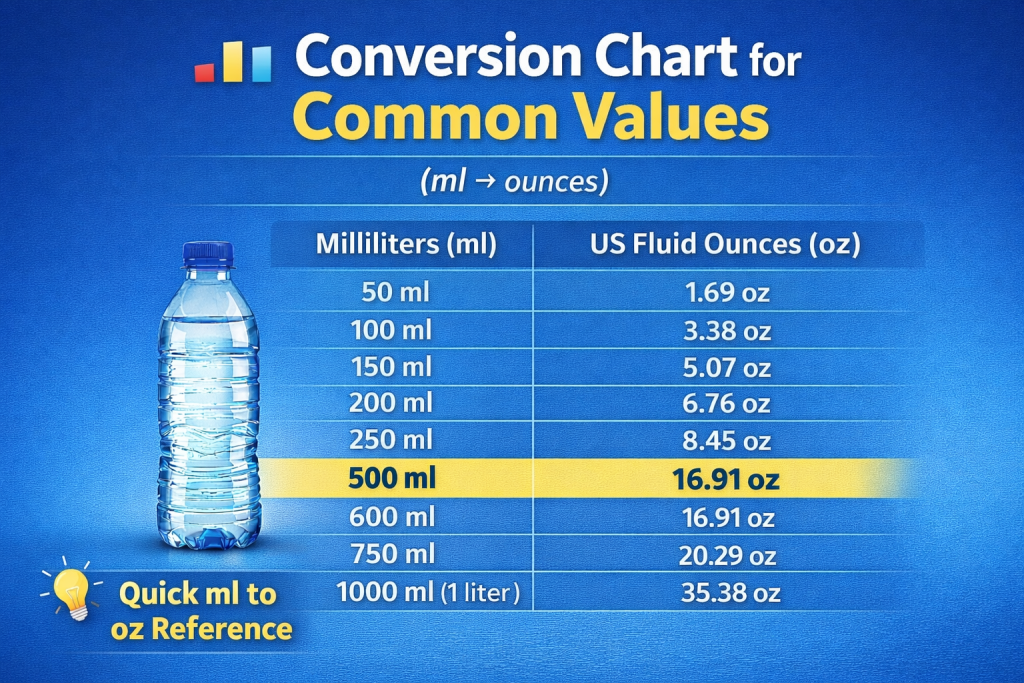
Here’s a quick reference chart.
| Milliliters | US Ounces |
|---|---|
| 100 ml | 3.38 oz |
| 250 ml | 8.45 oz |
| 300 ml | 10.14 oz |
| 400 ml | 13.52 oz |
| 500 ml | 16.91 oz |
| 750 ml | 25.36 oz |
| 1000 ml | 33.81 oz |
When You Should Use Ounces Instead of Milliliters
Use ounces when:
- Following American recipes
- Reading nutrition labels
- Buying beverages in the US
- Measuring protein shakes
Use milliliters when:
- Studying science
- Measuring medicine
- Using metric kitchen scales
Students preparing for medical entrance exams like NEET often practice unit conversions regularly.
Structured programs such as the NEET Crash Course can help strengthen these fundamentals:
Common Conversion Mistakes
Many people accidentally make these mistakes.
1. Confusing Ounces with Weight
Fluid ounces measure volume, not weight.
Example:
- 1 ounce water ≠ 1 ounce flour
2. Ignoring US vs UK Ounces
Always check which system the recipe uses.
US recipes are far more common online.
3. Rounding Too Early
If precision matters (medicine or chemistry), use:
16.91 oz
Not just 17 oz.
Why 500 ml Is a Popular Measurement
Manufacturers prefer 500 ml packaging because it balances:
- Portability
- Cost
- Portion control
It also equals roughly half a liter, making it easy to remember.
Simple Mnemonic to Remember
Here’s a memory trick.
Half liter ≈ 17 ounces
So whenever you see 500 ml, think:
👉 17 oz
This works in almost every everyday situation.
Frequently Asked Questions
Is 500 ml equal to 16 oz?
Not exactly.
500 ml = 16.91 oz
But people often round it to 17 oz.
How many ounces in 500 ml water?
Water follows the same volume conversion.
👉 500 ml water = 16.91 oz
Is 500 ml half a liter?
Yes.
1 liter = 1000 ml
So:
500 ml = 0.5 liters
Is 16 oz equal to 500 ml?
Close, but not exact.
16 oz = 473 ml
Final Thoughts
Make sure to keep this in mind if nothing else from this manual:
👉 500 ml = 16.91 fl. oz.
In everyday life, most people round that off to 17 fl. oz.
This little conversion pops up all over the place – in relation to your water bottle, cooking recipes, science experiments, and tracking your fitness.
Once you learn the simple formula behind this, you don’t have to search for “how many ounces in 500 ml” any longer.
And once you practice conversions like this, they are second nature to you.