





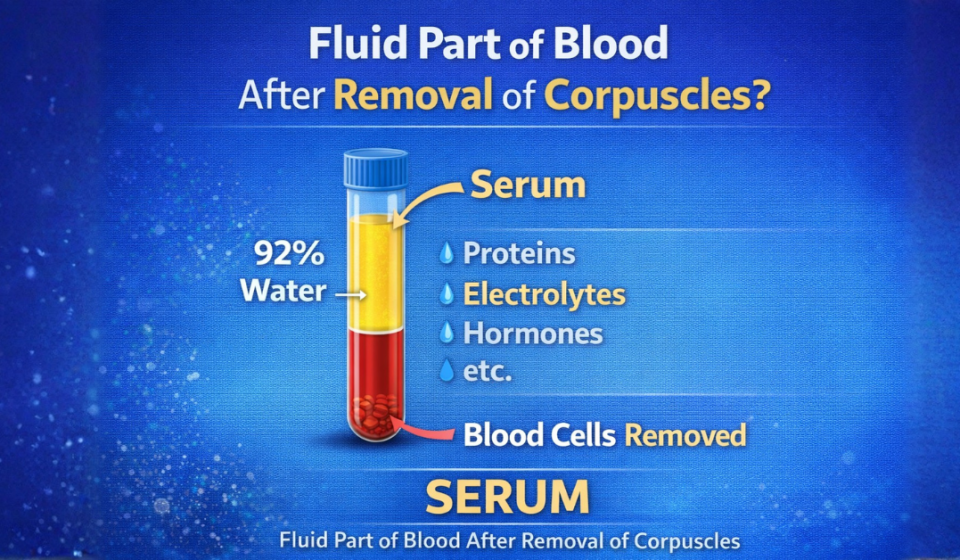

The serum component of blood is made up of fluids that have been separated from the rest of the blood after performing a process called centrifugation. After blood is placed in a centrifuge, blood cells and platelets are separated from their larger counterparts (red blood cells and white blood cells). Blood is separated into parts by a centrifuge and the remaining liquid contains no cell-based (formed elements) components other than the plasma itself.
Table Of Content
To further clarify:
👉 Serum is a portion of blood that remains after red blood cells, white blood cells, and platelets are removed by centrifugation leaving the liquid portion known as plasma.
It should be noted that serum lacks any of the components of blood that affect platelet function however plasma does contain these same components. Understanding this difference is important, as it will be difficult not to remember this difference after learning the difference!
The following provides a better understanding of the ways that serum and plasma differ.
🔑 Key Highlights
- After the removal of blood cells, the clear liquid part is called serum.
- After blood clots, the clear liquid portion remaining is called serum.
- Clotting proteins {e.g., fibrinogen} are absent from serum.
- Blood plasma contains clotting factors (proteins) and serum does not.
- Serum is commonly utilized in laboratory tests and diagnostic procedures in medicine.
- To prepare for biology/medical exams you need to know the difference between these two liquids (plasma versus; serum).
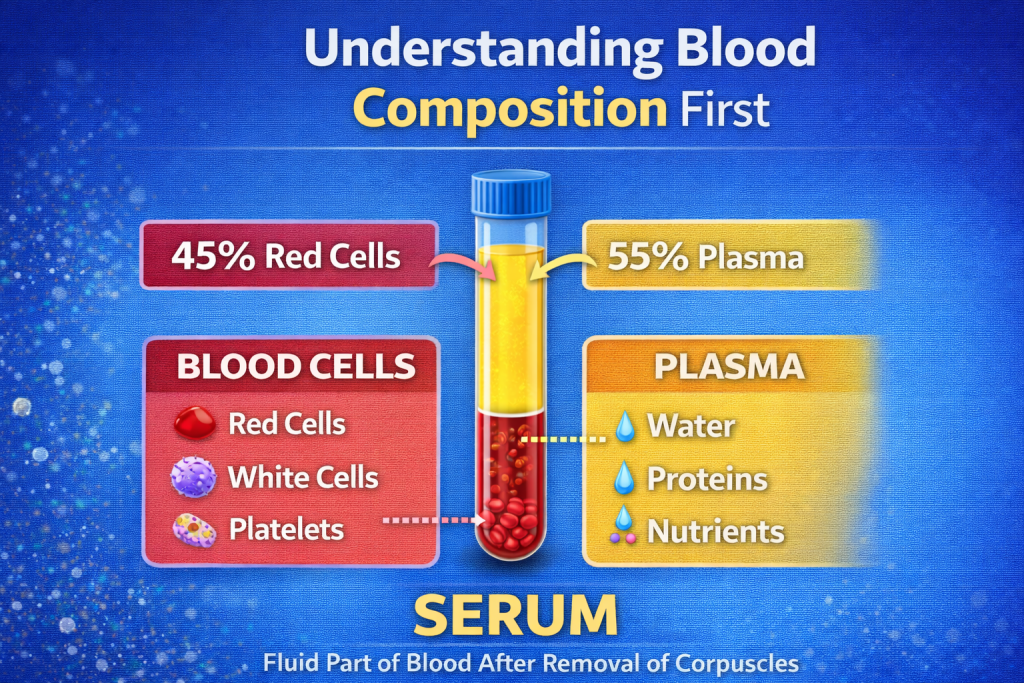
Understanding Blood Composition First
Before understanding serum, you need to know what blood is made of.
Blood contains two main components:
1. Blood Cells (Corpuscles)
These include:
- Red Blood Cells (RBCs) – transport oxygen
- White Blood Cells (WBCs) – fight infection
- Platelets – help blood clot
These three together are called corpuscles.
2. Liquid Component of Blood
The liquid part of blood contains nutrients, proteins, hormones, and waste products.
There are two important forms:
- Plasma
- Serum
Students often mix them up.
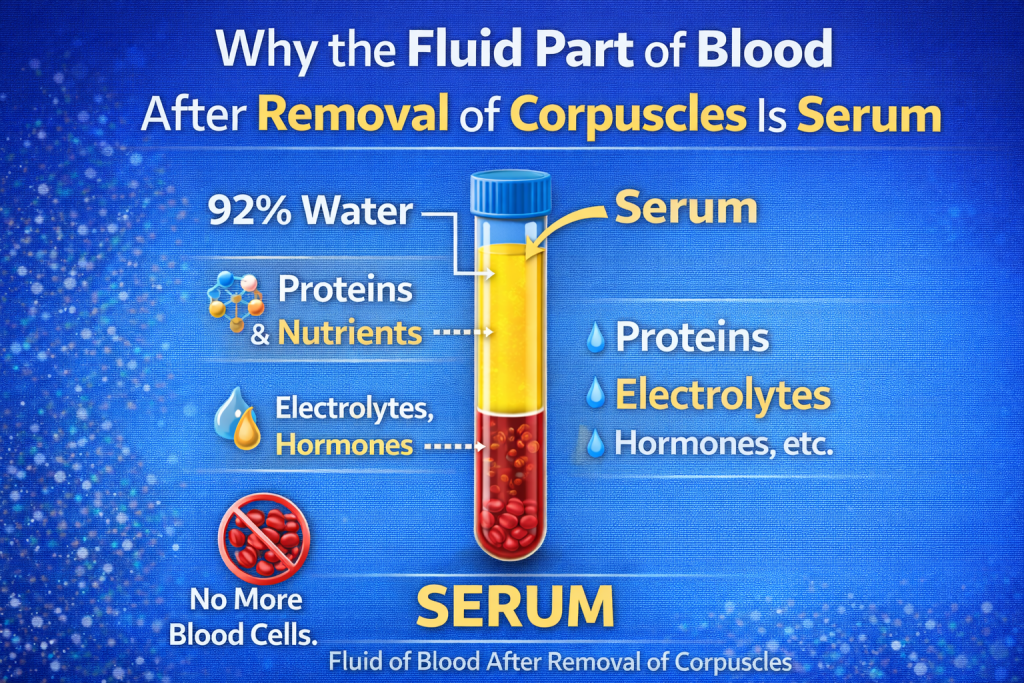
Why the Fluid Part of Blood After Removal of Corpuscles Is Serum
Let’s answer the exam question directly.
MCQ Question
Fluid part of blood after removal of corpuscles is ______.
A. Plasma
B. Lymph
C. Serum
D. Vaccine
✅ Correct Answer: C. Serum
Explanation
When blood clots, clotting proteins such as fibrinogen are used to form the clot. After this process, the remaining liquid is called serum.
So:
- Blood – cells + plasma
- Blood clotting occurs
- Clotting proteins are removed
- Remaining liquid = serum
This is why serum is the fluid part of blood after corpuscles and clotting proteins are removed.
Plasma vs Serum: The Key Difference
Students preparing for NEET or biology exams must clearly understand this table.
| Feature | Plasma | Serum |
|---|---|---|
| Contains blood cells | No | No |
| Contains clotting proteins | Yes | No |
| Obtained before clotting | Yes | No |
| Obtained after clotting | No | Yes |
In short:
👉 Plasma = liquid blood before clotting
👉 Serum = liquid blood after clotting
This difference appears in many competitive exam questions.
Real-World Use Case: Why Doctors Use Serum
Serum is extremely important in medical diagnostics.
Doctors use serum to perform tests such as:
- Hormone testing
- Antibody detection
- Viral infection diagnosis
- Liver function tests
- Kidney function tests
For example:
When laboratories test for diseases like HIV, hepatitis, or COVID-19, they often use serum samples.
According to the World Health Organization (WHO), serum testing helps detect immune responses and disease markers.
External reference:
NCERT Neet Question Answers
How Serum Is Collected in Laboratories
In hospitals and diagnostic labs, the process follows a simple method.
Step-by-step process:
- Blood is collected from the patient.
- The sample is placed in a test tube.
- The blood is allowed to clot naturally.
- The clot settles at the bottom.
- The remaining liquid is separated.
That liquid is serum.
This clear yellow fluid contains:
- Electrolytes
- Hormones
- Antibodies
- Proteins
But no clotting factors.
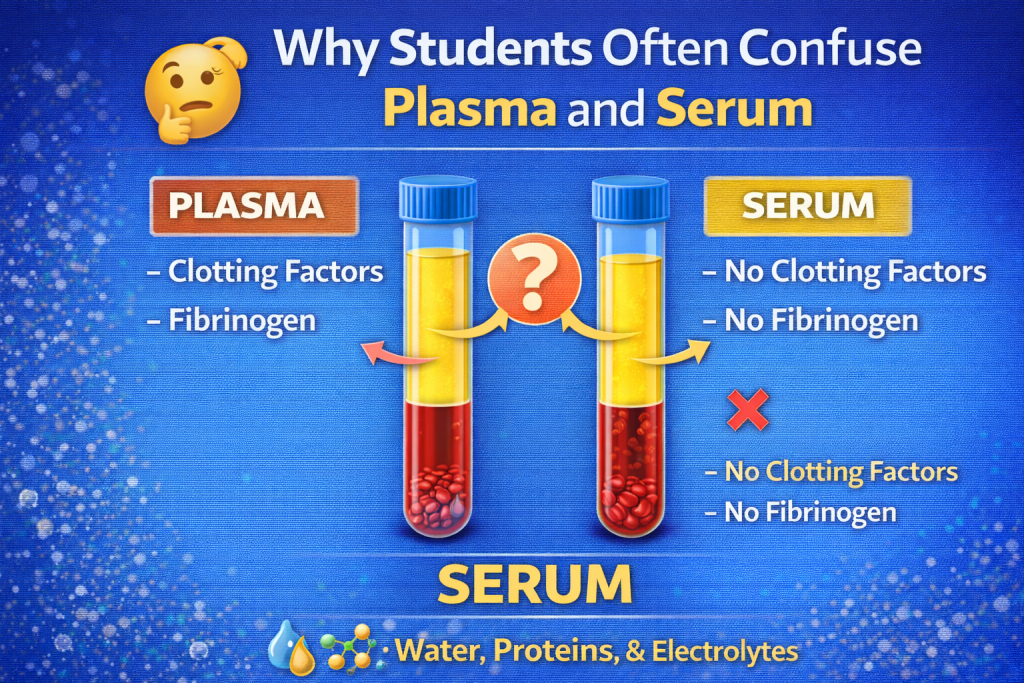
Why Students Often Confuse Plasma and Serum
Many textbooks explain this concept too quickly.
Students remember:
- Plasma
- Serum
But forget when each is formed.
Here is a simple trick.
Memory Trick 🧠
P before S
- Plasma = before clotting
- Serum = after clotting
Once you remember this rule, exam questions become easy.
Importance of Serum in Immunology
Serum plays a huge role in immunology research.
Scientists analyze serum to study:
- Antibody responses
- Vaccine effectiveness
- Infection detection
For example:
During vaccine research, scientists check antibody levels in serum to see how well the immune system responds.
This helps evaluate vaccines used worldwide.
Reference:
Difference Between
Blood Components Overview
To fully understand the fluid part of blood after removal of corpuscles, you should know the overall composition of blood.
Typical blood composition:
- 55% plasma
- 45% blood cells
Plasma itself contains:
- 90% water
- 7% proteins
- 3% nutrients, hormones, waste
When clotting occurs, plasma loses clotting proteins and becomes serum.
Why This Question Is Important for Exams
Biology entrance exams frequently test basic concepts like this.
Examples include:
- NEET
- Medical entrance exams
- Nursing exams
- Biology school tests
Many exam questions use the same pattern:
Fluid part of blood after removal of corpuscles is ______.
Students who confuse plasma and serum often choose the wrong answer.
But if you remember:
👉 Serum is the fluid part of blood, you will always answer correctly.
Related Biology Topics You Should Study
To understand blood biology better, you should also explore:
- Blood clotting mechanism
- Plasma proteins
- White blood cell functions
- Platelet role in clotting
You can read more biology exam guides here:
These guides explain NEET biology concepts and exam MCQs in simple language.
Quick Recap
Let’s summarize the concept quickly.
The fluid part of blood after removal of corpuscles is serum.
Key points:
- Blood contains cells and liquid components.
- Plasma is the liquid part before clotting.
- When clotting proteins are removed, plasma becomes serum.
- Therefore, serum is the fluid part of blood used in medical testing.
Correct MCQ Answer:
✔ C. Serum
Final Thoughts
Biology concepts often look complicated in textbooks, especially when they involve scientific terms like plasma, serum, and clotting factors.
But once you understand the basic process, everything becomes simple.
Students preparing for medical entrance exams should remember one rule:
👉 Plasma comes before clotting.
👉 Serum comes after clotting.
This small difference helps you solve multiple biology questions quickly.
And once you clearly understand that serum is the fluid part of blood, you will never confuse this concept again.