


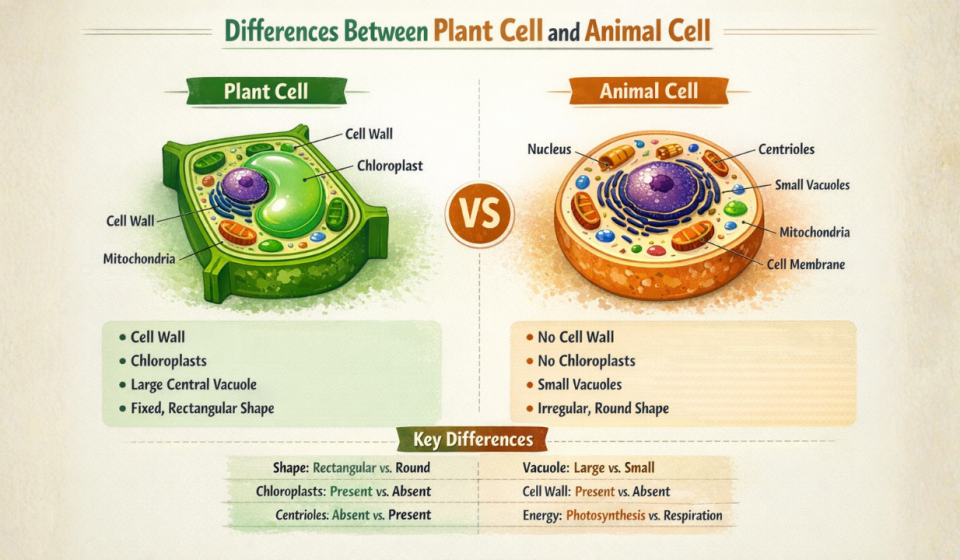

👉 Difference between plant cell and animal cell — here’s the direct answer you’re looking for.
👉 Difference between plant cell and animal cell mainly lies in their structure and functions:
Table Of Content
- 🔑 Key Highlights (Quick Revision 🚀)
- 🧠 Difference Between Plant Cell and Animal Cell – Simple Explanation
- 🔬 Difference Between Plant Cell and Animal Cell (Comparison Table)
- 🌱 What Makes Plant Cells Unique?
- 🔹 1. Cell Wall
- 🔹 2. Plastids (Chloroplasts)
- 🔹 3. Large Vacuole
- 🐾 What Makes Animal Cells Different?
- 🔹 1. No Cell Wall
- 🔹 2. Centrosome
- 🔹 3. Lysosomes
- 🔹 4. Cilia (Sometimes)
- 🎯 Real-Life Comparison (Makes It Easy!)
- ⚠️ Common Mistakes Students Make
- 📊 Real Biology Insight (Not Just Theory)
- 🔗 Related Topics You Should Study
- 💡 Best Way to Remember (Exam Trick)
- 😓 Feeling Confused? Totally Normal
- 📌 Primary Concept (Keyword Focus)
- 🏁 Final Answer (Crystal Clear)
- 🎯 Conclusion
Plant cells have a cell wall, plastids, and a large vacuole
Animal cells don’t have these, but they have centrosomes, lysosomes, and cilia
If you’ve ever mixed these up before an exam, you’re not alone. This topic looks simple but gets confusing when details pile up. Let’s break it down in a way that actually sticks.
🔑 Key Highlights (Quick Revision 🚀)
✔️ Difference between plant cell and animal cell = structure + function
✔️ Plant cells = cell wall + plastids + large vacuole
✔️ Animal cells = no cell wall + centrosome + lysosomes
✔️ Plant cells are generally larger
✔️ Animal cells are generally smaller and flexible
✔️ Important for NEET & basic biology
🧠 Difference Between Plant Cell and Animal Cell – Simple Explanation
Let’s keep it real.
While discussing Plant cell vs animal cell, we need to remember one thing:
Plant cells = designed to make food (photosynthesis)
Animal cells = designed to move and use energy
🔬 Difference Between Plant Cell and Animal Cell (Comparison Table)
| Feature | Plant Cell | Animal Cell |
|---|---|---|
| Cell wall | Present | Absent |
| Vacuole | Large central vacuole | Small or temporary vacuoles |
| Size | Larger | Smaller |
| Plastids | Present (chloroplasts) | Absent |
| Centrosome | Absent | Present |
| Cilia | Usually absent | May be present |
| Lysosomes | Rare | Common |
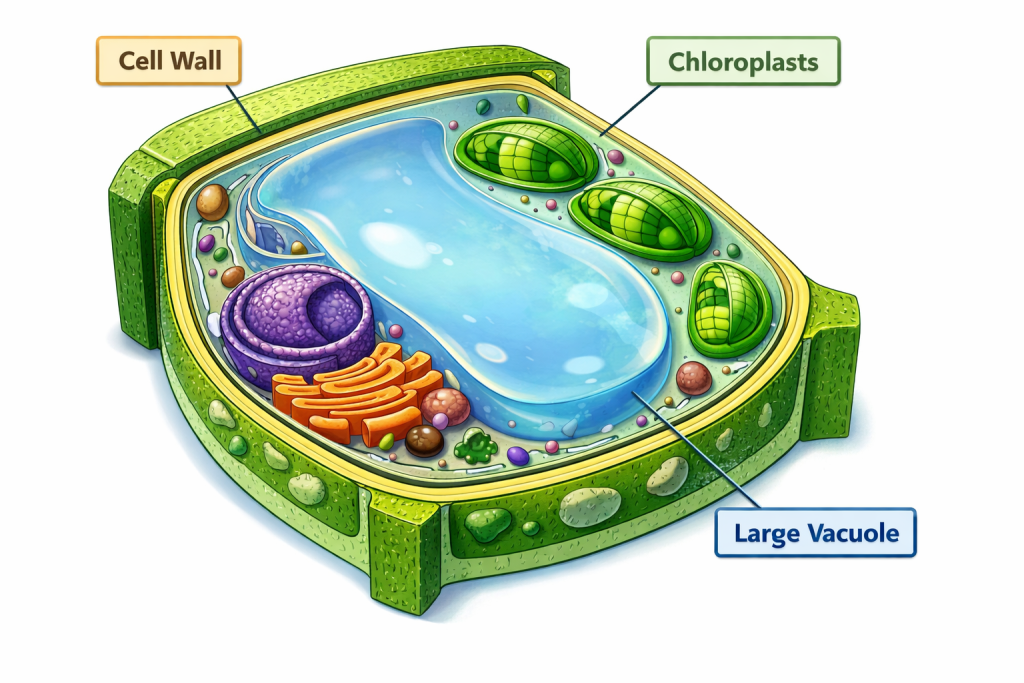
🌱 What Makes Plant Cells Unique?
Plant cells are special in that they enable plants to survive without the need to move.
🔹 1. Cell Wall
It gives strength and protection.
It is made of cellulose.
👉 It’s like an outer box that encloses the cell.
🔹 2. Plastids (Chloroplasts)
They carry out photosynthesis.
Photosynthesis: Light + food = food.
👉 Plant cells carry out photosynthesis, hence the ability to produce food.
🔹 3. Large Vacuole
It stores water, nutrients, and waste.
It helps in keeping the cell taut.
👉 It helps plants stay upright.
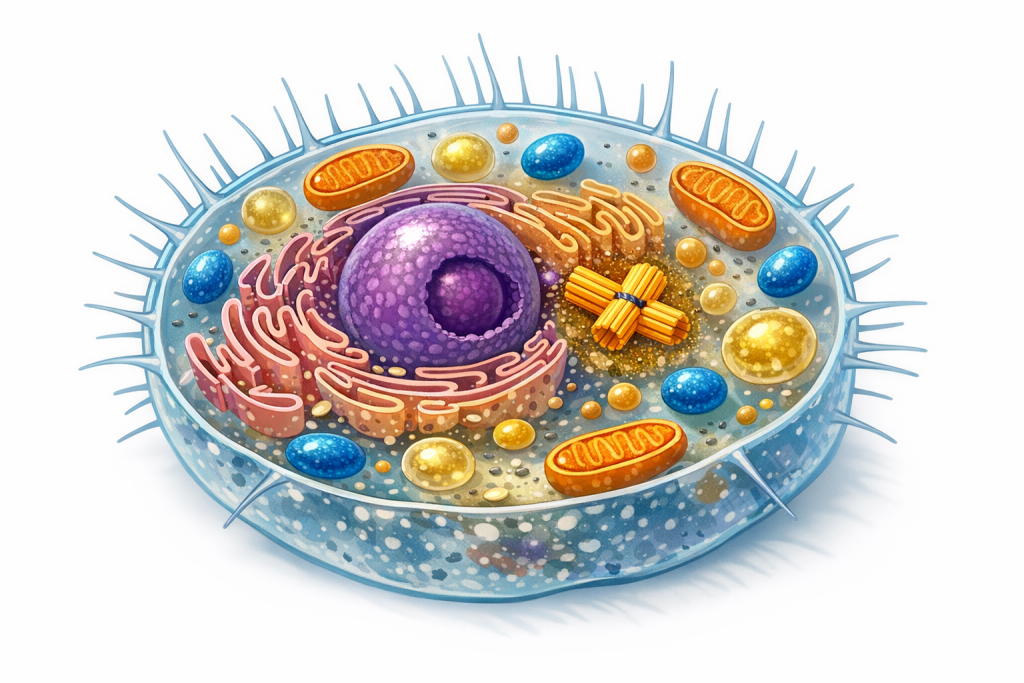
🐾 What Makes Animal Cells Different?
Unlike plant cells, animal cells are more flexible.
🔹 1. No Cell Wall
They just have a cell membrane.
🔹 2. Centrosome
It helps in cell division.
It helps in growth and repair.
🔹 3. Lysosomes
They are in charge of breaking down the body’s waste.
🔹 4. Cilia (Sometimes)
They are in charge of moving the body.
They are found in some animal cells.
🎯 Real-Life Comparison (Makes It Easy!)
Let’s make this more relatable.
Think of:
Plant cell = Solar-powered factory 🌞
Animal cell = Moving machine ⚙️
👉 Plant cells make their own energy
👉 Animal cells need to eat
⚠️ Common Mistakes Students Make
You might have seen these mistakes:
❌ Thinking animal cells have cell walls
❌ Forgetting plastids are found only in plants
❌ Confusing the size of the vacuole
✔️ Fix:
Plant cell: wall + plastids
Animal cell: no wall + more organelles
📊 Real Biology Insight (Not Just Theory)
As per standard sources such as:
👉 Plant cells evolved to facilitate autotrophic nutrition
👉 Animal cells evolved to facilitate heterotrophic lifestyle
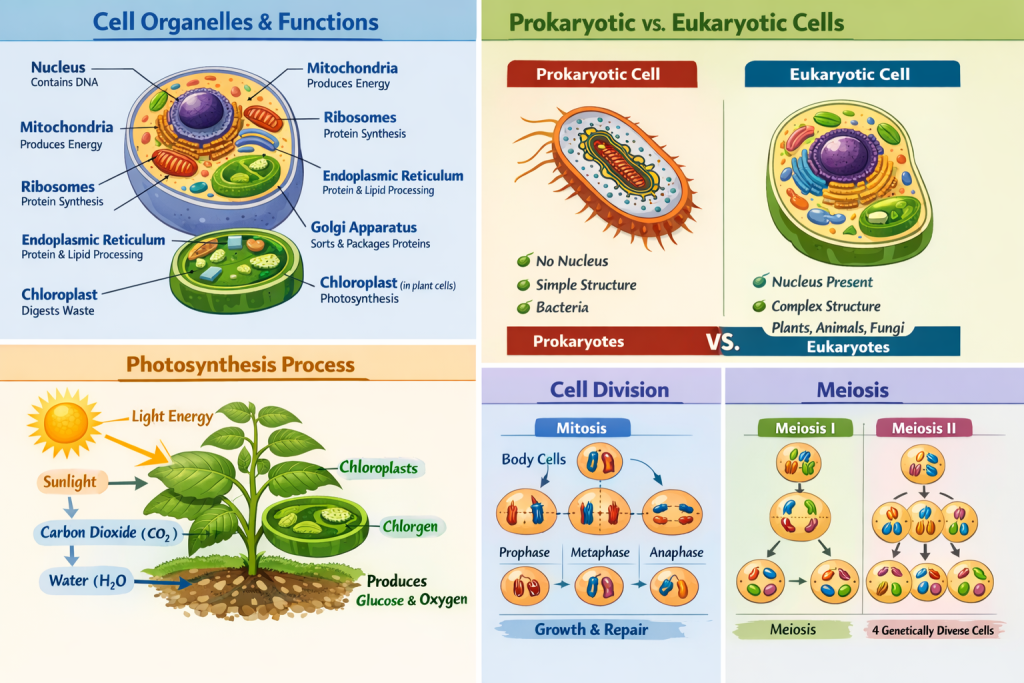
🔗 Related Topics You Should Study
To reinforce this topic, you should study:
Cell organelles and functions
Prokaryotic and eukaryotic cells
Photosynthesis process
Cell division
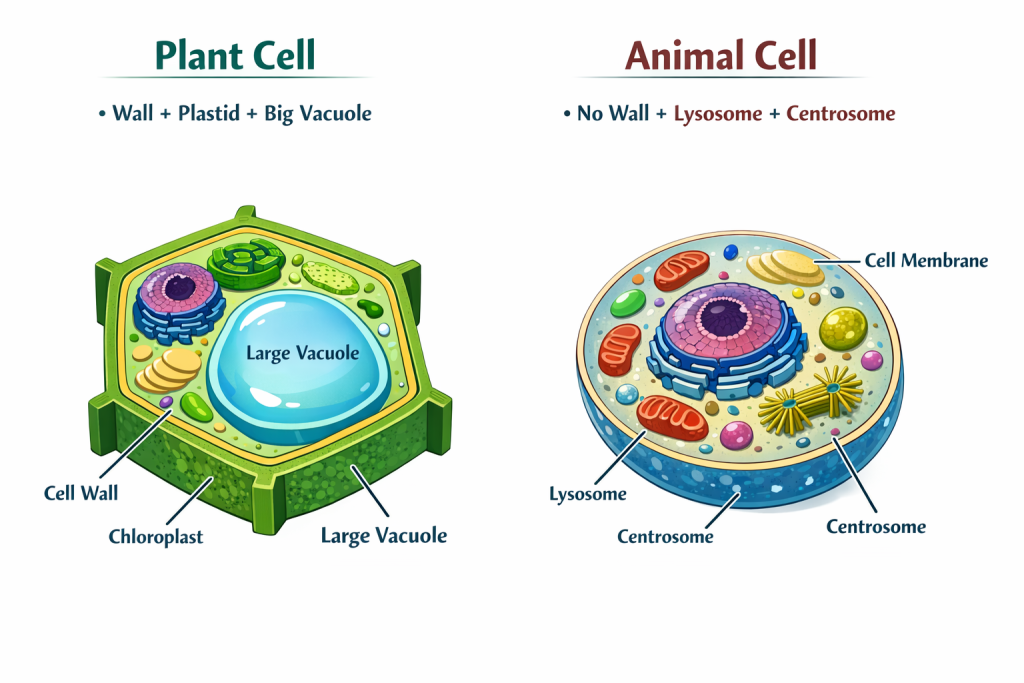
💡 Best Way to Remember (Exam Trick)
👉 The trick is:
“Plant = Wall + Plastid + Big Vacuole”
“Animal = No Wall + Lysosome + Centrosome”
😓 Feeling Confused? Totally Normal
This is an easy topic… until the tricky questions come.
But once we get the logic:
👉 Structure → Function
We get it.
📌 Primary Concept (Keyword Focus)
👉 The difference between the plant cell and the animal cell is an important concept that is tested in the exam.
🏁 Final Answer (Crystal Clear)
👉 The difference between the plant cell and the animal cell is:
Plant cells contain cell walls, plastids, and a large vacuole.
Animal cells lack these, but they contain centrosomes, lysosomes, and flexibility.
🎯 Conclusion
We think this is just a basic topic that needs to be memorized.
But once we get the logic, everything makes sense.
The difference between the plant cell and the animal cell is not just an exam question; it is the basis of the functioning of living organisms.
Focus on the logic, not the cramming. That is the key to getting better grades and enjoying the subject!