






abiotic factor is one of the first ideas that ecologists are taught—and it’s often a source of a simple but puzzling question.
abiotic factor comprises all non-living elements of an ecosystem.
Table Of Content
- 🔑 Key Highlights
- 🧠 What is an Abiotic Factor? (Simple Meaning)
- 🌍 Examples of Abiotic Factors
- ❓ Is Water Biotic or Abiotic? (Clear Answer)
- 🧠 Why Water is an Abiotic Factor
- ⚖️ Biotic vs Abiotic: Quick Comparison
- 🌱 Real-Life Examples (You See This Daily)
- 🌿 1. Plants Need Water
- 🐾 2. Animals Depend on Water
- 🌊 3. Aquatic Ecosystems
- 📊 Why Abiotic Factors Are So Important
- 📈 Scientific Insight
- ⚠️ Common Mistakes Students Make
- 🧠 Best Practices to Remember This Easily
- ✔️ 1. Apply the “Life Test”
- ✔️ 2. Learn through Examples
- ✔️ 3. Practice Your Classification Skills
- 🔗 Useful External Resources for Learning
- 📈 Why This Concept Matters in Your Career
- 🤔 Quick Self-Test
- 🧾 Summary
- 🎯 Final Thought
👉 Let’s clear your major doubt right at the start:
What is the nature of water—biotic or abiotic?
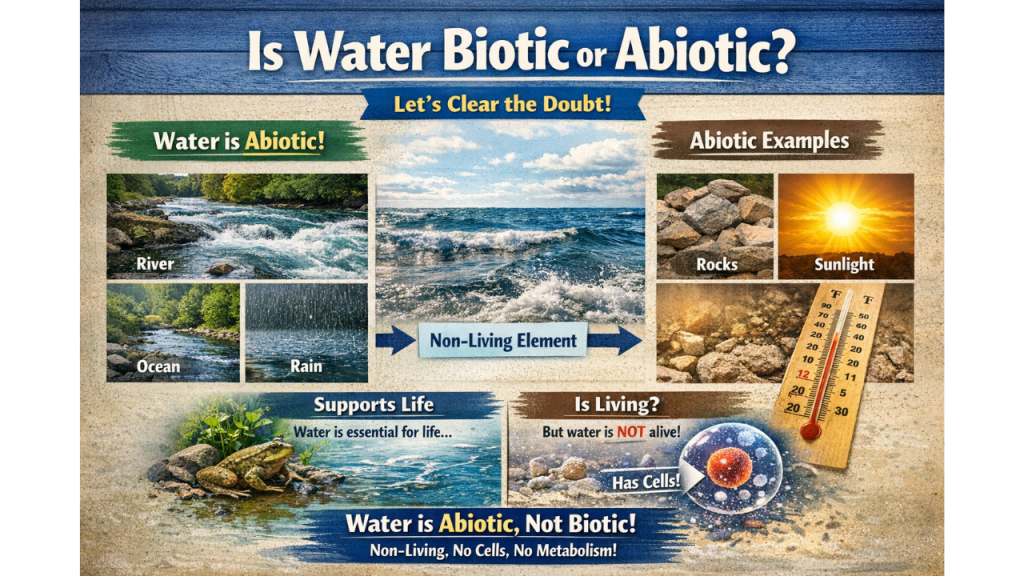
👉 Water is an abiotic factor.
Were you ever in doubt about it? Well, don’t worry; many students get confused between “supports life” and “is living.” Let’s clear that doubt once and for all—using examples, logical reasoning, and explanations that can help in your exams too!
NCERT Biology Question and Answer
🔑 Key Highlights
- Abiotic factor = Non-living factor ✔
- Water = Abiotic factor = Non-living ✔
- Water supports life but itself is non-living ✔
- Examples: sunlight, soil, air, temperature ✔
- Biotic factors = plants, animals, microorganisms ✔
🧠 What is an Abiotic Factor? (Simple Meaning)
An abiotic factor is defined as:
Any non-living part of an ecosystem.
Think of it this way:
👉 Abiotic Factor: “A” (without) + “biotic” (life)
👉 Meaning: Without life
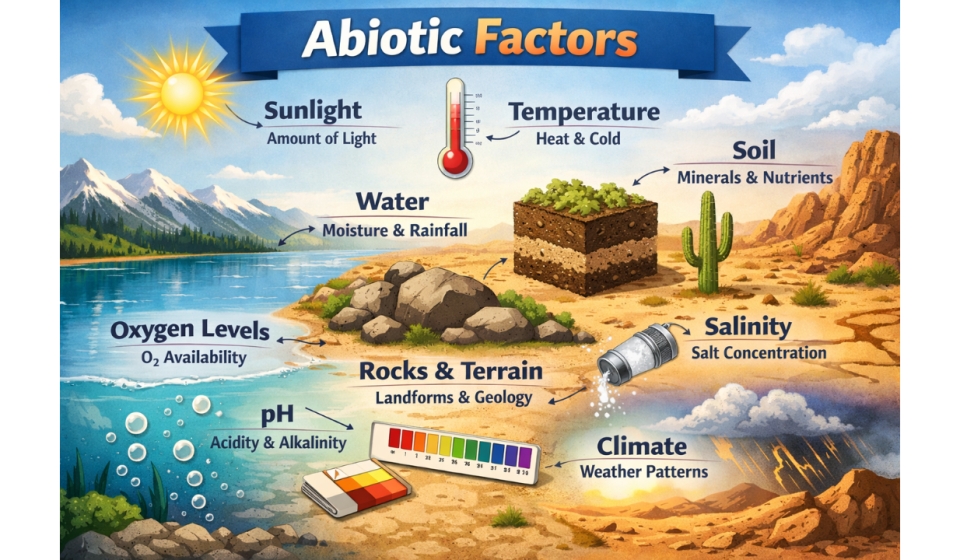
🌍 Examples of Abiotic Factors
- Water 💧
- Sunlight ☀️
- Air (oxygen, carbon dioxide)
- Soil
- Temperature
👉 These are all vital parts of an ecosystem, but none of them are alive.
❓ Is Water Biotic or Abiotic? (Clear Answer)
Now, let’s get more specific:
- 👉 Is water a biotic or abiotic factor?
- ✔ Water is an abiotic factor.
🧠 Why Water is an Abiotic Factor
In order for water to be considered “alive” and a biotic factor, it would need:
- Grow
- Reproduce
- Respond to stimuli
- Have metabolism
👉 Water does not do any of these things.
Even though water is a fundamental requirement for life, it is not alive and therefore an abiotic factor.
⚖️ Biotic vs Abiotic: Quick Comparison
| Feature | Biotic Factors 🌱 | Abiotic Factors 💧 |
|---|---|---|
| Living? | Yes | No |
| Examples | Plants, animals, bacteria | Water, air, soil |
| Role | Life processes | Support environment |
👉 This table alone can help you answer most exam questions instantly.
🌱 Real-Life Examples (You See This Daily)
Now, let’s make it real, not just theory.
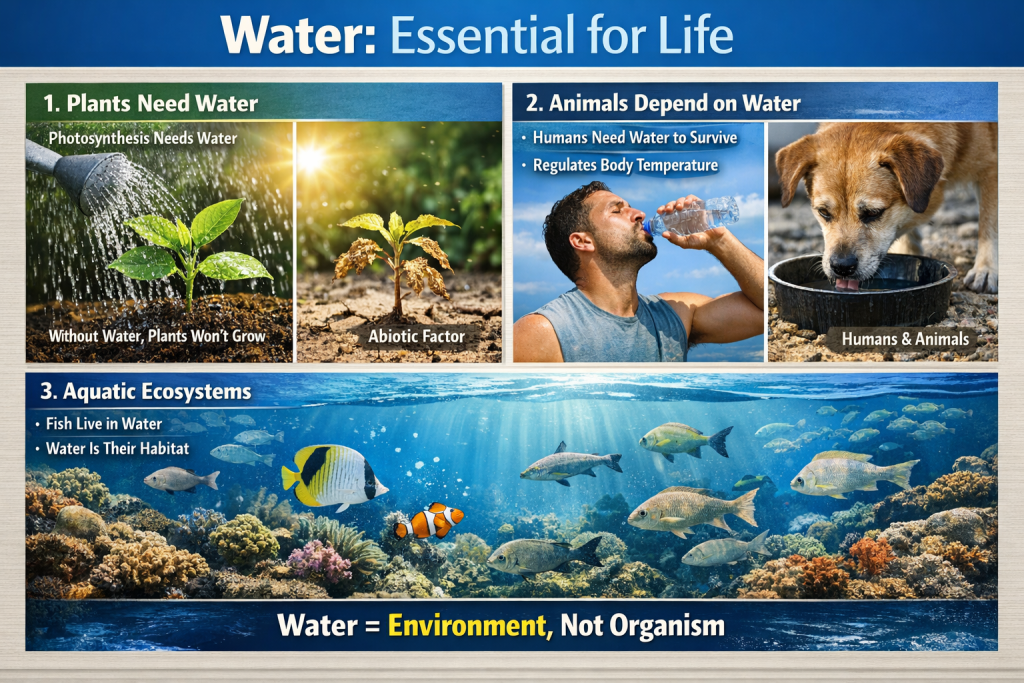
🌿 1. Plants Need Water
- Plants use water for photosynthesis
- Without water, they won’t grow
- But water is still abiotic
🐾 2. Animals Depend on Water
- Humans need water for just 3 days
- Water helps maintain body temperature
🌊 3. Aquatic Ecosystems
- Fish live in water
- Water is their environment
But here’s an important point: Water is environment, not organism
📊 Why Abiotic Factors Are So Important
You might be thinking:
👉 “If it’s not alive, why is it so important?”
Well, here are the answers:
- Controls the balance of the ecosystem
- Specifies the habitat of living organisms
- Affects the growth of living organisms
📈 Scientific Insight
According to ecological research, the availability of water is the key factor that directly impacts the biodiversity of the area.
👉 More water → More life!
👉 Less water → A desert!
⚠️ Common Mistakes Students Make
Let’s clarify the confusion before the exams!
❌ Mistake 1: “Water is the basis of life. Therefore, it is living.”
👉 WRONG!
❌ Mistake 2: Mixing Up Biotic and Abiotic Factors
Confusion:
Soil (Abiotic) and Microorganisms present in the Soil (Biotic)
❌ Mistake 3: Complicating the Definitions
It is simple:
👉 “If it is not living → It is Abiotic”
🧠 Best Practices to Remember This Easily
If you are looking for ways to ensure you do not forget this:
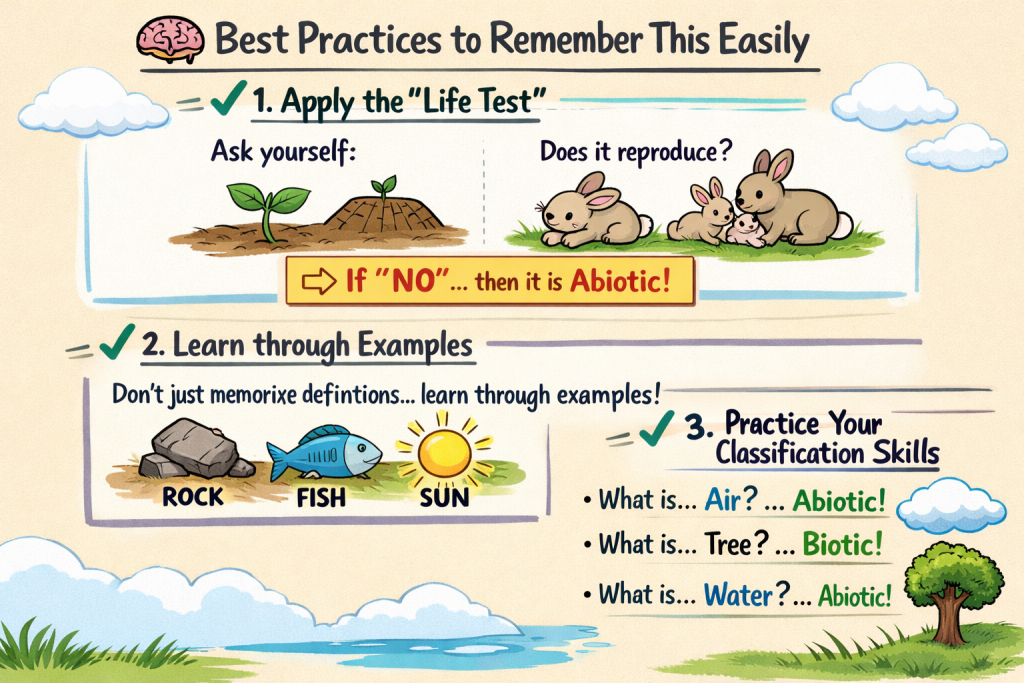
✔️ 1. Apply the “Life Test”
Ask yourself:
- Does it grow?
- Does it reproduce?
👉 If “NO”… then it is abiotic!
✔️ 2. Learn through Examples
Don’t just memorize definitions… learn through examples!
✔️ 3. Practice Your Classification Skills
Try this:
- What is… Air?… Abiotic!
- What is… Tree?… Biotic!
- What is… Water?… Abiotic!
🔗 Useful External Resources for Learning
To learn more:
These sites are global authorities on this topic!
📈 Why This Concept Matters in Your Career
You might not think so—but yes, it does!
Abiotic factor can be applied in:
- Environmental science
- Agriculture
- Climate studies
- Biology research
Even in the following areas in the tech industry:
- Data modeling of ecosystems
- Environmental analytics
🤔 Quick Self-Test
Try this:
👉 Is sunlight biotic or abiotic?
✔ Abiotic
👉 Is a plant biotic or abiotic?
✔ Biotic
👉 Is water biotic or abiotic?
✔ Abiotic
🧾 Summary
- Abiotic factor = Non-living part of the environment
- Water = Abiotic, NOT Biotic!
- It plays a very important role in our environment!
- It supports life, but it’s NOT ALIVE!
🎯 Final Thought
At first, you might think that this concept is a bit tricky, and you might get confused or think you might get the answer wrong. Well, you’re not alone! It’s normal to get a bit confused at first. But once you get the simple logic, you’ll realize how easy it is!
The next time you’re asked:
👉 “Is water biotic or abiotic?”
You’ll answer confidently:
👉 “Abiotic factor.”