





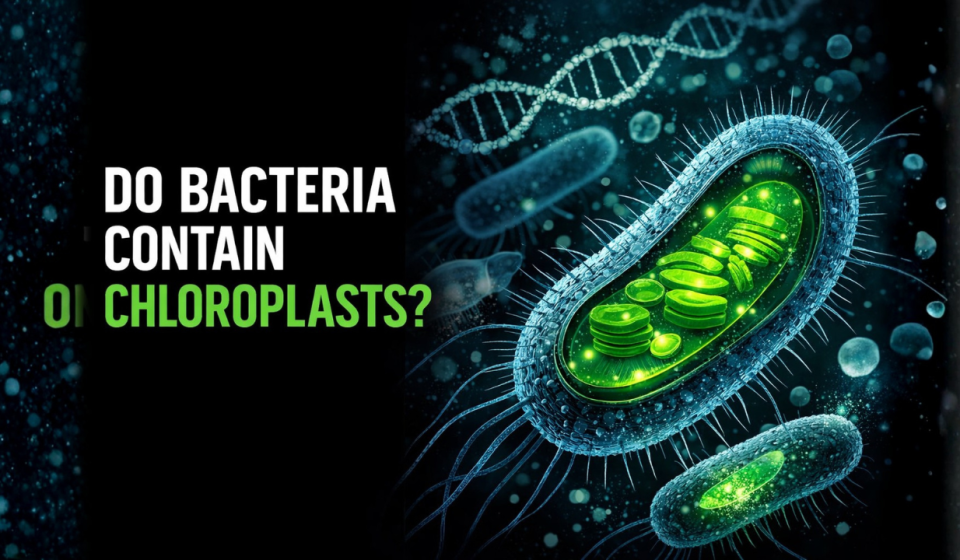

Do bacteria contain chloroplasts?
No. Bacteria do not contain chloroplasts.
Table Of Content
- Do bacteria contain chloroplasts?
- Key Highlights
- What Are Chloroplasts?
- Do Bacteria Contain Chloroplasts or Not?
- Why?
- Then How Do Some Bacteria Perform Photosynthesis?
- How?
- Types of Photosynthetic Bacteria
- 1. Cyanobacteria (Blue-Green Algae)
- 2. Purple Bacteria
- 3. Green Sulfur Bacteria
- Prokaryotes vs Eukaryotes
- Prokaryotes (Bacteria)
- Eukaryotes (Plants and Animals)
- Rule to Remember
- Real-World Insight
- Common Mistakes Students Make
- Best Practices to Remember This Concept
- Visual Memory
- Revision Tip
- Final Thoughts
If you have been confused about this, and honestly many students are, here is the simple truth:
Bacteria are organisms, and they lack membrane-bound organelles, including chloroplasts.
Some bacteria still perform photosynthesis. So how does that work? Let us break it down step by step.
Key Highlights
- Bacteria do not have chloroplasts
- They are prokaryotes, which means they have no nucleus and no organelles
- Some bacteria still perform photosynthesis
- Chlorophyll is present in the cell membrane, not in chloroplasts
- Special structures called reaction centers help absorb light
- Bacteria play a role in ecosystems and nutrient cycles
What Are Chloroplasts?
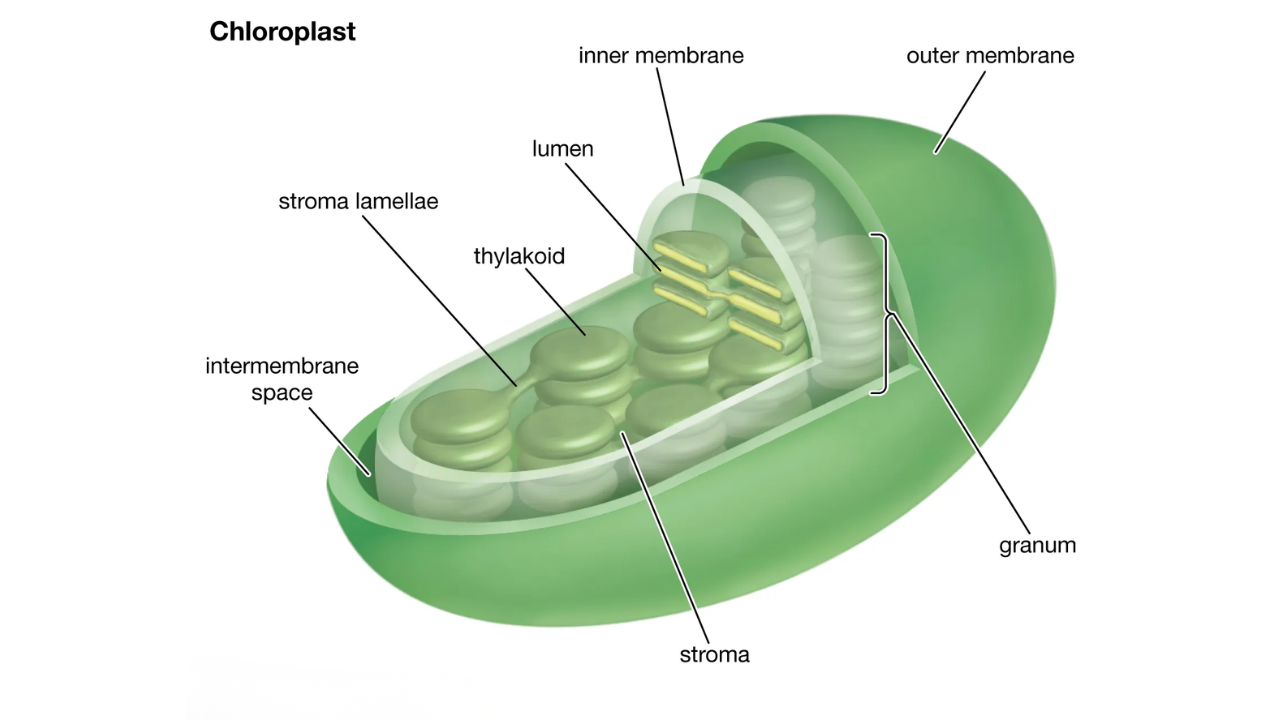
- Chloroplasts are organelles found in plant cells and algae.
- They contain chlorophyll, which is a green pigment.
- They capture sunlight and convert light energy into chemical energy through photosynthesis.
Think of chloroplasts as solar panels inside plant cells.
Do Bacteria Contain Chloroplasts or Not?
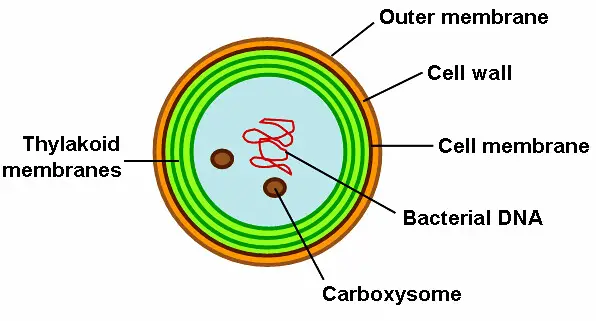
No, bacteria do not contain chloroplasts.
Why?
Because bacteria belong to the prokaryotic group, which means they have no true nucleus and no membrane-bound organelles.
Bacteria have a simple internal structure.
Chloroplasts are organelles, so bacteria simply do not have them.
Then How Do Some Bacteria Perform Photosynthesis?
This is where things get interesting.
Even though bacteria do not have chloroplasts, some bacteria, like cyanobacteria, still make their food.
How?
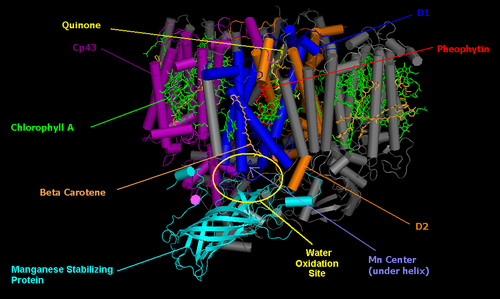
- Instead of chloroplasts, chlorophyll is found in the cell membrane.
- Specialized regions called reaction centers absorb sunlight.
- Internal folded membranes increase the surface area.
- In simple words, plants use chloroplasts, but bacteria use their cell membrane system.
Types of Photosynthetic Bacteria
Not all bacteria can photosynthesize. Only specific ones can:
1. Cyanobacteria (Blue-Green Algae)
- They perform oxygen-producing photosynthesis.
- They are very similar to plants.
- They are responsible for increasing oxygen on Earth billions of years ago.
2. Purple Bacteria
They use light but do not release oxygen.
3. Green Sulfur Bacteria
- They live in low-light environments.
- They use sulfur compounds instead of water.
- These organisms prove that chloroplasts are not the only way to perform photosynthesis.
Prokaryotes vs Eukaryotes
Understanding this difference clears up a lot of confusion.
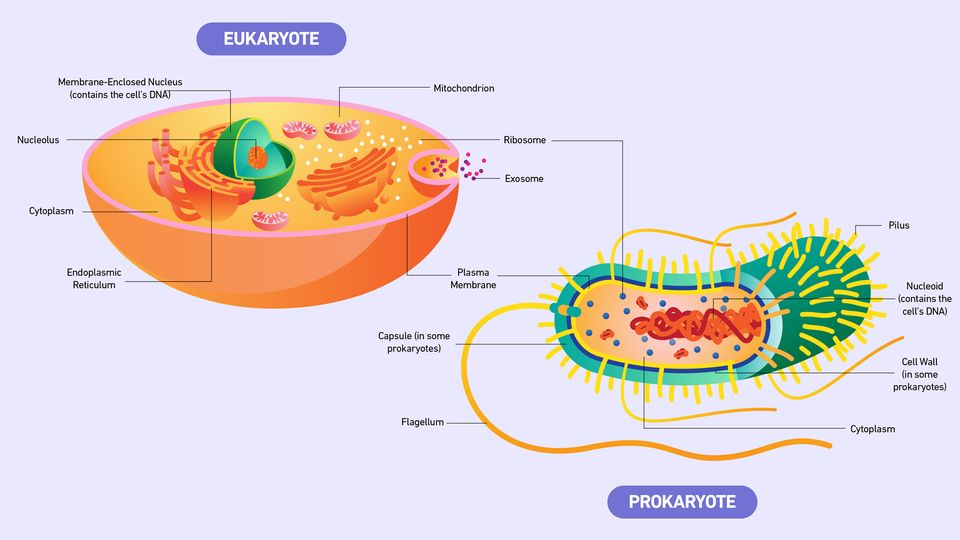
Prokaryotes (Bacteria)
- They have no nucleus and no chloroplasts.
- Their DNA is in circular form.
- They are small and simple.
Eukaryotes (Plants and Animals)
They have a nucleus and chloroplasts.
They have a complex structure.
Rule to Remember
If it is a prokaryote, then it has no chloroplast.
Real-World Insight
- You might think this is a textbook question, but it is more important than it looks.
- Cyanobacteria helped create Earth’s oxygen atmosphere.
- They still contribute to around twenty to thirty percent of oxygen production.
- If you are aiming for a career in biotechnology, microbiology, or environmental science, this concept forms the foundation of cell biology interviews and exams.
Common Mistakes Students Make
Let us fix them quickly:
- Bacteria have chloroplasts because they photosynthesize.
→ This is wrong. They use membrane-based systems. - All photosynthesis needs chloroplasts.
→ This is wrong. Bacteria prove otherwise. - Cyanobacteria are plants.
→ This is wrong. They are bacteria.
Best Practices to Remember This Concept
You do not want to forget this before your exam, right?
Use this trick: Prokaryote = No Plastids
Visual Memory
- Plants → Chloroplast
- Bacteria → Membrane
Revision Tip
Practice multiple choice questions on:
- Photosynthesis
- Cell structure
- Prokaryotes vs eukaryotes
Final Thoughts
At a glance, the question “Do bacteria contain chloroplasts” sounds simple, but it opens the door to understanding how life evolved and adapted in different ways.
You now know that bacteria are simple but powerful. They do not need chloroplasts to survive, and nature always finds solutions.
If you are preparing for exams or building a career in science, mastering these basics gives you an edge.