




7 Important Facts About the Function of Golgi Apparatus in Cell (And What Happens If It Disappears)

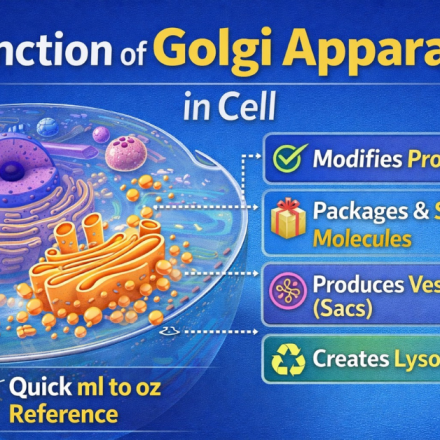
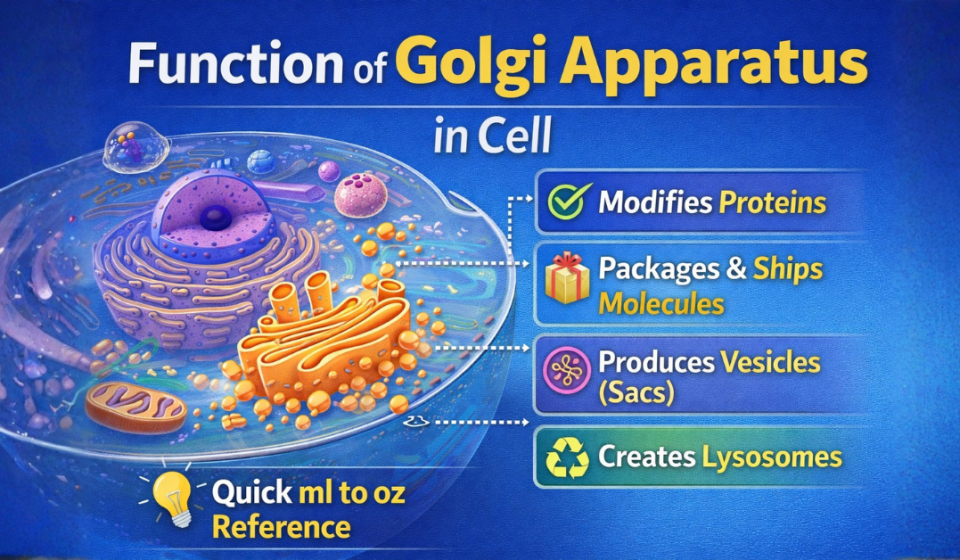
The Golgi apparatus modifies, packages, and transports lipids and proteins into vesicles for delivery to other parts of the cell or outside the cell.
Table Of Content
If the Golgi apparatus were to be destroyed, vesicle formation would stop completely and so would intracellular transport; therefore, the cell would no longer be able to create, package or send proteins or lipids to other parts of the cell or outside of the cell.
In laymen’s terms, without a Golgi apparatus, the entire shipping and delivery system of the cell breaks down.
There appears to be a lot of confusion among biology students about the Golgi apparatus because the majority of textbook descriptions include difficult technical terms and complex diagrams. However, once you start thinking of the Golgi apparatus as the cell’s shipping and packaging centre, it all becomes crystal clear.
Let’s break it down clearly.
🔑 Key Highlights
- The Golgi Apparatus is one of the most important organelles in a cell that helps with the packaging of proteins and transporting them to various destinations. The Golgi Apparatus receives proteins from the Endoplasmic Reticulum (ER). After the Golgi has modified proteins and lipids; they are then sent to their ultimate destinations. The Golgi creates transport vesicles that help to carry materials throughout the cell or to the external environment. If the Golgi apparatus were to be removed then the ability to form vesicles would stop. This would create a disruption in all functions associated with secretion and transport and many other functions within the cell would also be affected.
- Therefore the answer to the MCQ question would be (a) “All sorts of vesicle formation stop”.
Understanding the Function of Golgi Apparatus in Cell
The Golgi apparatus is an essential component of eukaryotic cell structure.
It was first identified and named by Camillo Golgi in 1898; since then it has become one of the principal topics in the study of cell biology and medicine.
How the Golgi Apparatus Looks Inside the Cell
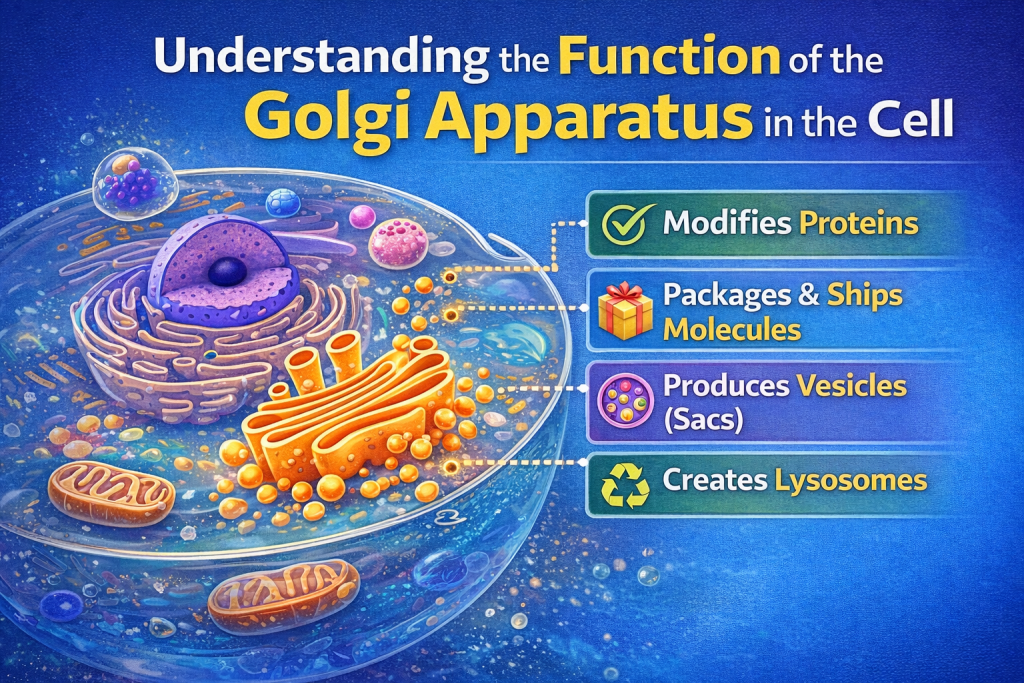
The Golgi apparatus appears as a series of flattened membranous sac-like structures inside decompressed eukaryotic cells, often termed “pancakes” or “folded ribbons.”
The Role of the Golgi Apparatus is Not Just in Its Appearance
The Golgi apparatus performs three main tasks:
- Modification of proteins and lipids
- Packaging them into vesicles
- Transporting them to their correct destination
Think of it as the Amazon warehouse of the cell 📦.
Proteins arrive, get labeled and packaged, and then get shipped to where they are needed.
1. Protein Modification: Preparing Molecules for Use
Proteins produced in the rough endoplasmic reticulum (RER) are not immediately ready to function.
They need additional chemical processing.
The Golgi apparatus performs modifications such as:
- Glycosylation (adding sugar molecules)
- Phosphorylation
- Protein folding adjustments
These changes help proteins:
- Become functional
- Reach the correct cellular location
- Avoid degradation
According to research published by the National Center for Biotechnology Information (NCBI), Golgi-mediated protein modification is essential for cell signaling and immune response.
2. Packaging and Vesicle Formation
After modification, the Golgi apparatus packages molecules into small membrane-bound sacs called vesicles.
These vesicles transport materials to:
- Other organelles
- The cell membrane
- Outside the cell
This is the core part of the function of Golgi apparatus in cell.
Without this packaging process, proteins would simply accumulate inside the cell and never reach their destination.
Examples of transported materials include:
- Hormones
- Digestive enzymes
- Antibodies
- Membrane proteins
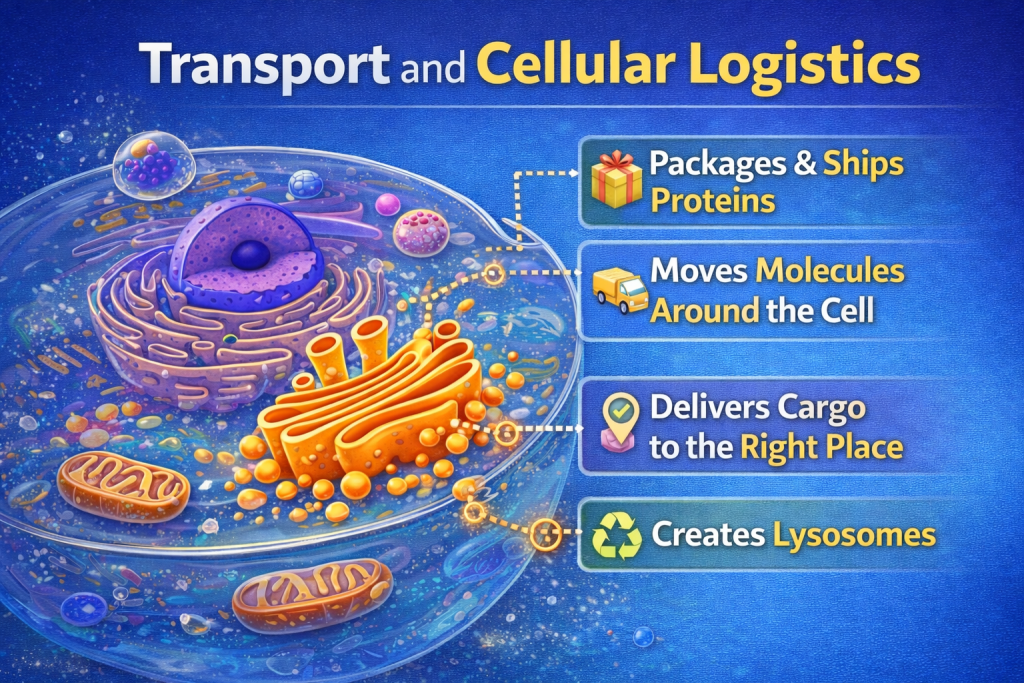
3. Transport and Cellular Logistics
Cells constantly move materials from one place to another.
The Golgi apparatus ensures that each vesicle carries the correct molecular label so it reaches the right destination.
This process is known as protein sorting.
For example:
| Protein Type | Destination |
|---|---|
| Digestive enzymes | Lysosomes |
| Hormones | Outside the cell |
| Membrane proteins | Cell membrane |
Without this sorting system, cellular organization would collapse.
What Happens If Golgi Apparatus Is Removed?
Now let’s address the key question students often ask:
What happens if Golgi apparatus is removed?
The answer is simple but extremely important.
If the Golgi apparatus disappears from the cell:
1. Vesicle Formation Stops
The Golgi is responsible for producing transport vesicles.
Without it:
- No vesicles form
- No proteins get transported
- Cellular logistics break down
This is why the correct MCQ answer is:
✅ (a) All sorts of vesicle formation stop
2. Protein Transport Fails
Even though the endoplasmic reticulum can still produce proteins, those proteins cannot reach their destinations.
They remain stuck in the ER.
This leads to:
- Cellular stress
- Accumulation of proteins
- Possible cell death
3. Secretion Stops
Cells constantly secrete substances like:
- Hormones
- Enzymes
- Neurotransmitters
Without the Golgi apparatus, secretion mechanisms collapse.
For example:
- Pancreatic cells cannot release digestive enzymes.
- Immune cells cannot release antibodies.
4. Lysosome Formation Stops
Lysosomes contain digestive enzymes that break down waste materials.
The Golgi apparatus forms these lysosomes.
Without the Golgi:
- Lysosomes cannot form
- Waste accumulates
- Cellular damage increases
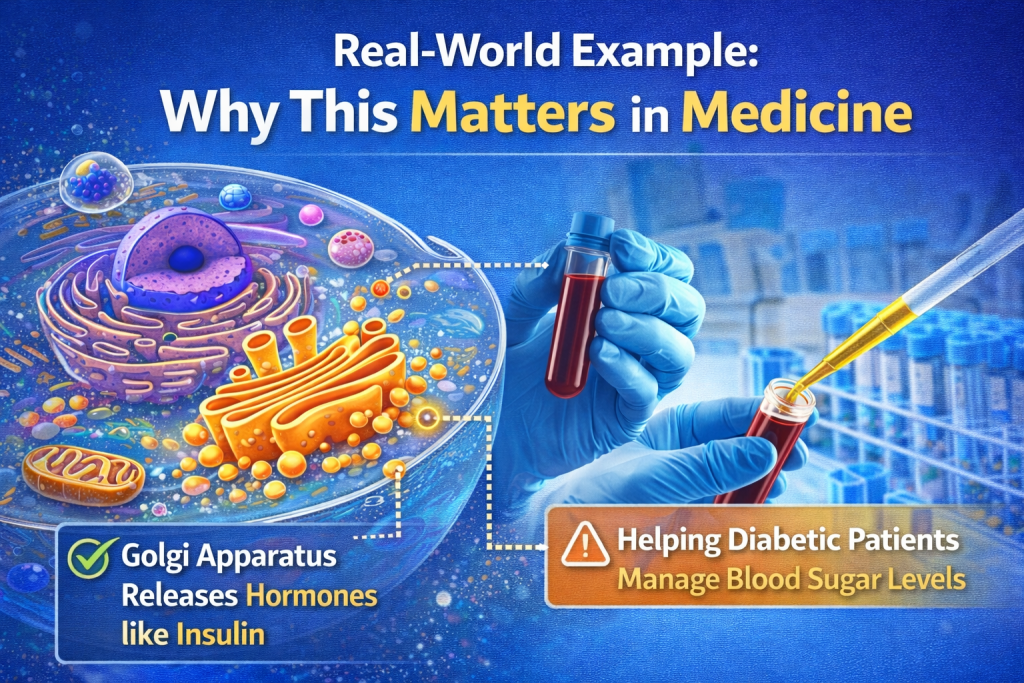
Real-World Example: Why This Matters in Medicine
Many genetic disorders occur due to Golgi apparatus dysfunction.
One example is I-cell disease (Inclusion Cell Disease).
In this condition:
- The Golgi fails to properly label enzymes
- Enzymes fail to reach lysosomes
- Cellular waste accumulates
Patients experience:
- Developmental delays
- Bone abnormalities
- Organ damage
Medical researchers study Golgi function to better understand diseases like:
- Alzheimer’s disease
- Parkinson’s disease
- Cancer progression
Source:
Why Students Often Get This Question Wrong
Many students confuse the functions of different organelles.
Here is a quick comparison.
| Organelle | Function |
|---|---|
| Ribosome | Protein synthesis |
| Endoplasmic Reticulum | Protein transport |
| Golgi Apparatus | Protein modification & vesicle formation |
| Mitochondria | Energy production |
So when asked:
“What happens if Golgi apparatus is removed?”
You should immediately think:
➡ Vesicle formation stops
Best Study Trick for Remembering Golgi Apparatus
Students preparing for NEET, UPSC, or biology exams often use a simple memory trick.
The “Post Office” Analogy 📬
Golgi apparatus = Cell’s Post Office
- Proteins arrive → letters
- Golgi packages them → envelopes
- Vesicles deliver them → postal delivery
Remove the post office?
No letters get delivered.
Same logic applies inside cells.
Related Topics You Should Study
If you want to master cell biology, these topics connect closely with the function of Golgi apparatus in cell.
You can explore related educational articles here:
Suggested reading topics:
- Endoplasmic Reticulum functions
- Lysosome formation
- Protein transport mechanisms
- Cell organelles and their roles
Studying these topics together helps you understand the complete cellular workflow.
Quick Recap
Let’s summarize the key points.
The function of Golgi apparatus in cell includes:
- Modifying proteins and lipids
- Packaging them into vesicles
- Transporting them to the correct location
If the Golgi apparatus is removed:
- Vesicle formation stops
- Protein transport fails
- Secretion processes stop
- Lysosome formation cannot occur
That is why the correct MCQ answer is:
✔ (a) All sorts of vesicle formation stop
Final Thoughts
In biology, textbooks can be intimidating because of the sheer amount of material they provide on organelles all at the same time.
When there is a back-story associated with each organelle, however, biology becomes much more understandable, and it makes sense.
The Golgi apparatus is like a logistics manager for the cell. Without this, the whole distribution system will be disrupted.
If you are preparing for an entrance exam such as NEET or UPSC, remembering this simple concept will help with solving many questions quickly on the MCQ format.
Once you understand how Golgi apparatus works within a cell, you will never confuse it with another organelle again.