





Lipids, an essential form of biological molecule in all living beings, serve important functions such as energy storage, the structure of cell membranes and chemical signalling. One question often asked in classically related to the above would be; “What are the building blocks of lipids and give an example?”
Table Of Content
- What Are Lipids?
- Key Characteristics of Lipids
- Monomers of Lipids
- 1. Glycerol
- 2. Fatty Acids
- Types of Fatty Acids
- Saturated Fatty Acids
- Monounsaturated Fatty Acids
- Polyunsaturated Fatty Acids
- Step-by-Step Explanation
- Step 1: Identify lipid building blocks
- Step 2: Understand lipid formation
- Step 3: Recognize lipid structure
- Final Answer
- Additional Notes
- Functions of Lipids
- Triglycerides
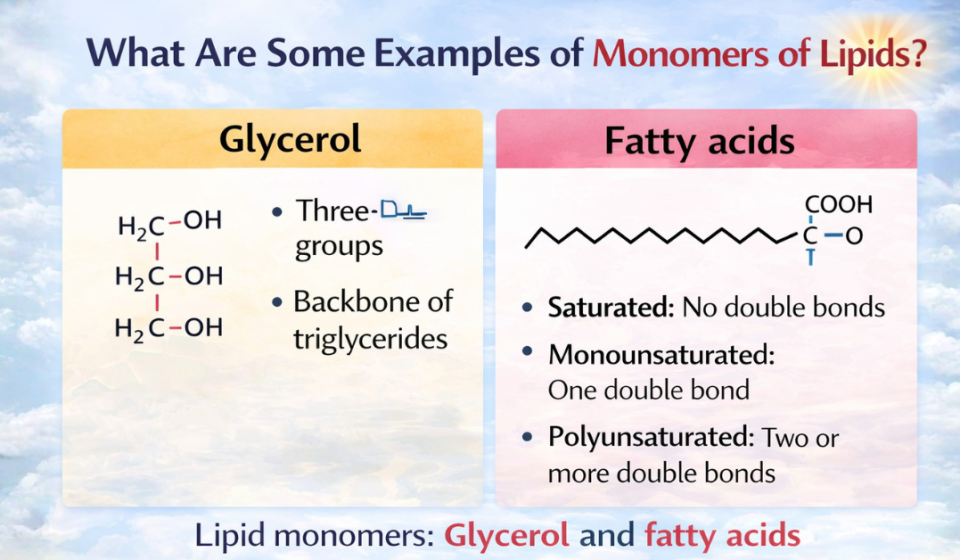
Although they are not considered true polymers like proteins or carbohydrates, lipids are commonly said to consist of two basic building blocks which are glycerol and a fatty acid. Glycerol and fatty acids can join together to produce different types of lipids such as fats, oils, and waxes.
Studying lipid monomers will help students understand how energy-storing molecules and cell membranes are produced in the biological world.
If you want more explanations and solved biology questions, you can explore helpful educational resources at chennaineet.
What Are Lipids?
Lipids are organic molecules made primarily of carbon, hydrogen, and oxygen atoms.
Key Characteristics of Lipids
- Non-polar molecules
- Insoluble in water
- Soluble in non-polar solvents
- Serve as energy storage molecules
Examples of lipids include:
- Fats
- Oils
- Waxes
- Steroids
- Phospholipids
These molecules are essential for maintaining the structure and function of living cells.
Monomers of Lipids
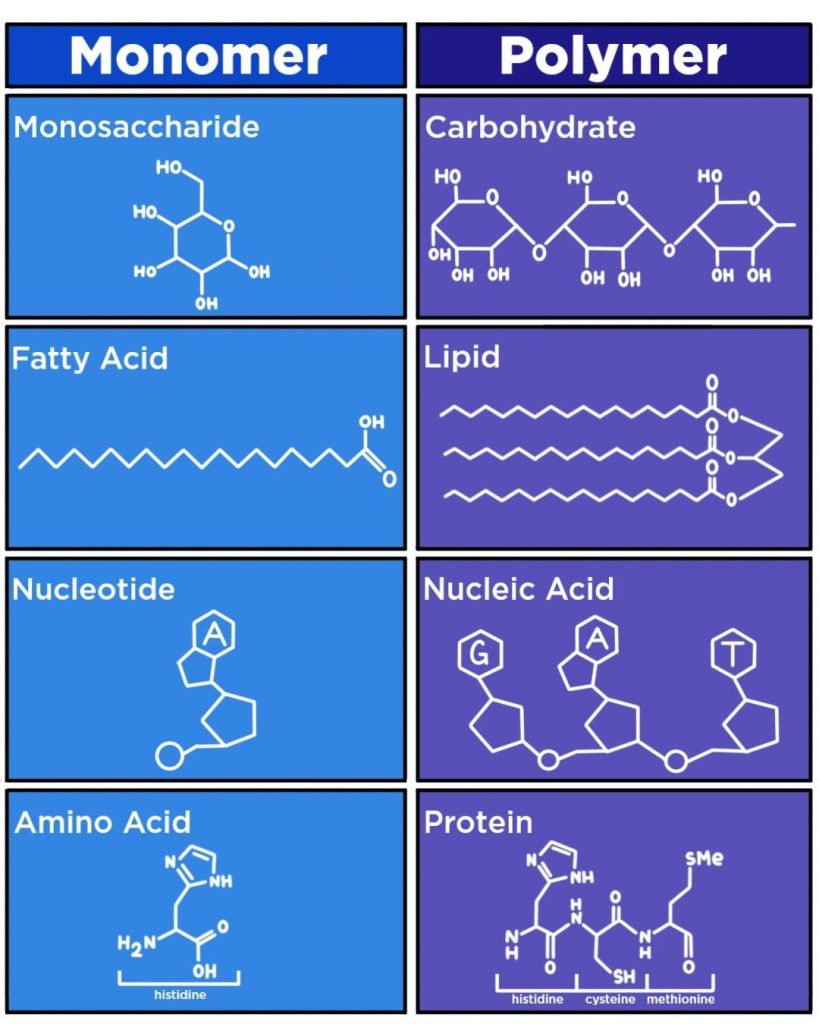
Unlike proteins or carbohydrates, lipids do not have repeating monomer chains. However, the molecules that commonly form lipids are:
1. Glycerol
Glycerol is a small organic molecule with three carbon atoms and three hydroxyl groups.
Important properties of glycerol:
- Sweet-tasting compound
- Used in food and pharmaceutical industries
- Acts as the backbone of triglycerides
In many lipids, glycerol combines with fatty acids to form larger molecules.
2. Fatty Acids
Fatty acids are long chains of hydrocarbons attached to a carboxyl group (-COOH).
They are the major building blocks of many lipid molecules.
Types of Fatty Acids
Fatty acids are classified based on the number of hydrogen atoms and double bonds:
Saturated Fatty Acids
- Contain no double bonds
- Carbon atoms are fully saturated with hydrogen
Example: Palmitic acid
Monounsaturated Fatty Acids
- Contain one double bond
Example: Oleic acid
Polyunsaturated Fatty Acids
- Contain two or more double bonds
Example: Linoleic acid
Step-by-Step Explanation
Step 1: Identify lipid building blocks
Lipids are mainly formed from:
- Glycerol
- Fatty acids
Step 2: Understand lipid formation
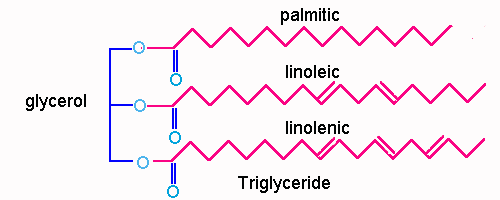
Lipids are formed through a dehydration reaction, where glycerol combines with fatty acids.
Example:
- 1 glycerol molecule
- 3 fatty acid molecules
These combine to form triglycerides (triacylglycerols).
Step 3: Recognize lipid structure
Triglycerides contain:
- One glycerol backbone
- Three fatty acid chains
This structure stores large amounts of energy in living organisms.
Final Answer
The main examples of monomers of lipids are:
- Glycerol
- Fatty acids
These molecules combine to form larger lipid molecules such as triglycerides, phospholipids, and waxes.
Additional Notes
Lipids play several important roles in the body.
Functions of Lipids
- Energy storage
- Protection of organs
- Thermal insulation
- Formation of cell membranes
- Chemical signaling
Triglycerides
Triacylglycerols (triglycerides) make up more than 95% of dietary lipids.
They are commonly found in foods such as:
- Butter
- Vegetable oils
- Nuts
- Meat
Understanding lipid monomers helps students learn how biological molecules form and function in living systems.
For more biology explanations and exam preparation materials, visit chennaineet.