




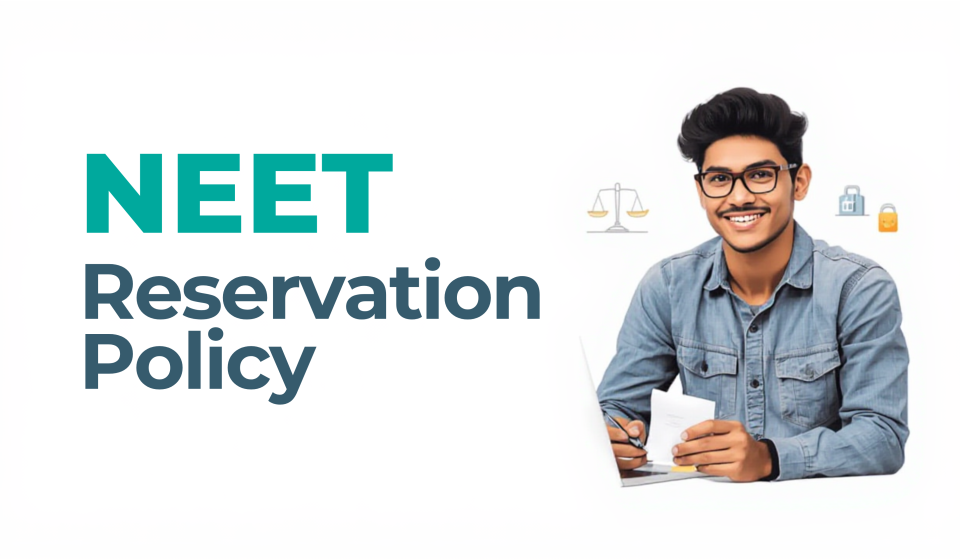

Every year, lakhs of students write the NEET exam with the hope of getting admission into a medical college. While marks and rank are very important, another key factor that affects admission is the NEET reservation policy. Many students focus only on preparation and forget to understand how reservation works, which later creates confusion during counselling.
Table Of Content
- What Is NEET Reservation Policy?
- NEET All India Quota Reservation Explained
- Reservation Under State Quota
- Reservation for Economically Weaker Section (EWS)
- Reservation for Persons with Disabilities (PwD)
- Reservation in Deemed Universities
- How Reservation Affects Cut-Off Marks
- Documents Required for Reservation
- Common Mistakes Students Make
- Why Understanding Reservation Is Important
- Role of Guidance Platforms
- Final Conclusion
- Related Topics
Educational platforms such as Chennai NEET Academy and guidance websites help students not only with subject preparation but also with admission-related rules like reservation and quota systems.
What Is NEET Reservation Policy?
The NEET reservation policy is a government system that provides seat benefits to students belonging to specific categories such as SC, ST, OBC, EWS, and PwD. This system is followed to make medical education accessible to students from different social and economic backgrounds.
Reservation rules are applied during admissions in:
- Government medical colleges
- Central universities
- Some deemed universities
- All India Quota seats
- State quota seats
The main aim is to create fairness and balanced representation in medical education.
NEET All India Quota Reservation Explained
Under the NEET admission process, 15% of seats in government medical colleges are filled through All India Quota counselling. The NEET All India Quota reservation system follows a uniform rule across the country.
The usual distribution is:
| Category | Reservation Percentage |
| SC | 15% |
| ST | 7.5% |
| OBC-NCL | 27% |
| EWS | 10% |
| PwD | 5% (horizontal) |
These seats are filled through central counselling conducted by MCC. Students from any state can compete for these seats under the NEET All India Quota reservation system.
Reservation Under State Quota
The remaining 85% seats in government colleges fall under state quota. Each state has its own reservation policy based on state government rules. Some states offer extra reservation for:
- Backward classes
- Minority communities
- Local residents
- Special categories
Students must carefully check their state counselling guidelines before applying. Platforms like Chennai NEET Academy regularly publish simplified explanations of state-wise counselling and reservation rules to help students avoid confusion.
Reservation for Economically Weaker Section (EWS)
The EWS category is meant for students from the General category whose family income is below the prescribed limit. Under the NEET reservation policy, EWS students get 10% reservation mainly in government colleges and All India Quota seats.
To claim EWS benefits, students must provide:
- Income certificate
- Asset declaration
- Residence proof
This helps financially weaker students compete fairly with others.
Reservation for Persons with Disabilities (PwD)
Students with benchmark disabilities (usually 40% or more) are eligible for PwD reservation. This reservation is horizontal, meaning it is applicable across all categories.
Under the NEET reservation policy, PwD candidates must submit:
- Disability certificate
- Medical board verification report
- Functional ability assessment
This system ensures equal opportunity for students with physical challenges.
Reservation in Deemed Universities
Deemed universities do not fully follow state quota rules. Most of them mainly offer:
- Open category seats
- Institutional quota
- Management quota
- NRI quota
Some deemed universities may follow partial reservation rules. Students must read each university’s admission brochure carefully before applying.
How Reservation Affects Cut-Off Marks
Cut-off marks differ for each category under the NEET reservation policy. In general:
- General category cut-offs are the highest
- Reserved category cut-offs are lower
Cut-off marks change every year depending on:
- Difficulty of the exam
- Number of students appearing
- Seat availability
Understanding this pattern helps students set realistic expectations for admission.
Documents Required for Reservation
To claim benefits under the NEET reservation policy, students must have:
- Valid caste certificate (SC/ST/OBC)
- Non-creamy layer certificate (for OBC)
- EWS income certificate
- PwD disability certificate
- Identity proof
Wrong or expired certificates can lead to cancellation of admission. Educational websites like Chennai NEET Academy guide students on how to prepare and verify these documents correctly.
Common Mistakes Students Make
Some common mistakes include:
- Choosing the wrong category during registration
- Uploading incorrect certificates
- Not renewing income or caste certificates
- Missing counselling deadlines
- Ignoring document verification instructions
These mistakes can be avoided by learning about the NEET reservation policy early.
Why Understanding Reservation Is Important
Knowing how the NEET All India Quota reservation and state quota systems work helps students:
✔ Predict cut-off trends
✔ Choose colleges wisely
✔ Prepare documents in advance
✔ Reduce counselling stress
✔ Avoid last-minute confusion
Reservation is not against merit. It is designed to support students from weaker sections and ensure balanced opportunities.
Role of Guidance Platforms
Apart from subject preparation, students need counselling guidance. Websites like Chennai NEET Academy provide:
- Reservation updates
- Counselling alerts
- College admission guidance
- Category-wise cut-off trends
- Document checklists
Such support helps students make informed decisions.
Final Conclusion
The NEET reservation policy plays a major role in deciding who gets a medical seat in India. Every aspirant should clearly understand how reservation works, how the NEET All India Quota reservation is applied, and what documents are needed before counselling starts.
Strong preparation combined with clear knowledge of reservation rules increases your chances of successful admission.
Students who stay updated through trusted platforms like Chennai NEET Academy can confidently face the admission process without confusion.
Related Topics: